Cybersecurity compliance: What is the imperative for businesses?
March 28, 2025
10 minutes

Cybersecurity compliance is far more than a more legal requirement. It is a fundamental component of ensuring data security, avoiding penalties, and safeguarding business operations. Every organization must fully understand the applicable regulations to effectively protect its systems and sensitive data.
What are the key cybersecurity regulations? Which types of data need to be secured, and how can companies meet these requirements?
Compliance and IT Security
Cybersecurity compliance refers to an organization’s ability to follow legal and regulatory standards related to data protection, risk management, and system security. It helps prevent data breaches, fines, and other penalties. However, compliance also builds trust with customers and partners, becoming a fundamental part of the organization’s cybersecurity strategy.
An effective compliance policy goes beyond merely meeting legal obligations. It involves a proactive approach, where the security of data and systems is continually assessed and improved. Thus, compliance with regulations naturally becomes part of overall security management.
Today’s challenge is to keep up with the rapid pace of new regulations and technologies. How can organizations ensure their internal processes remain aligned with evolving rules, while also embracing new technologies?
What Types of Data Are Subject to Compliance Requirements?
Compliance mainly applies to two critical types of data: digital identities and sensitive data. Although not always directly linked, digital identities often serve as an entry point to access other sensitive data.
1. Digital Identities
Digital identities include all information used to identify and authenticate a user or system, such as usernames, passwords, and biometric data. Protecting these identities is essential, as their compromise can allow unauthorized access to other sensitive data.
2. Sensitive Data
Sensitive data refers to information that, if disclosed or altered, could harm the confidentiality or security of individuals or organizations. This includes personal, financial, medical, and critical infrastructure data.
MINI-QUIZ
Which of the following data are considered “sensitive” under cybersecurity regulations?
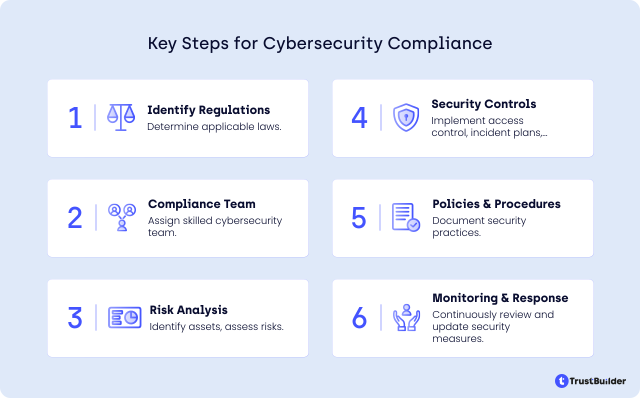
Key Steps for Cybersecurity Compliance
European regulations
Here’s an overview of the main European cyber security regulations.
GDPR – General Data Protection Regulation
Adopted in 2016 and enforced since 2018, the GDPR is the cornerstone of personal data protection. It requires businesses to ensure the confidentiality, transparency, and security of data belonging to European citizens. In practice, this means obtaining clear consent from users, allowing them to access their data anytime, and giving them the option to delete it upon request.
NIS2 – Network and Information Security Directive
Adopted in 2022, with a transposition deadline of October 2024, the NIS2 Directive boosts the security of information systems and strengthens risk management. It now applies to 18 sectors deemed essential or critical.
Access your roadmap to NIS2 compliance.
DORA – Digital Operational Resilience Act
Adopted in 2022 and applicable from January 2025, the DORA specifically targets companies in the financial sector and their ICT suppliers. It imposes strict rules on IT risk management and requires business continuity plans to maintain financial services’ stability. Importantly, DORA is a “lex specialis” of NIS2, meaning it takes precedence over NIS2 when addressing issues specific to the financial sector.
Explore the role of the CISO and Management in regards to DORA Compliance.
eIDAS – European Regulation on Electronic Identification
Adopted in 2014 and fully applicable since 2016, the eIDAS regulation covers all sectors using electronic transactions, not just financial services. It aims to secure and standardize transactions across the EU by defining electronic identification, digital signatures, and trust services. It establishes three levels of electronic signatures (simple, advanced, and qualified), each offering varying degrees of security and legal value.
Find out more about the implications for digital identity in Europe with eIDAS and eIDAS 2.0
PSD2/PSD3 – Payment Services Directives
The PSD2 directive (adopted in 2015) and the upcoming PSD3 create a framework for electronic payments in Europe. They primarily affect financial institutions and payment service providers (such as fintechs). Their goal is to enhance payment security, foster innovation, and protect consumers, with a focus on strong customer authentication (SCA) and secure access to bank accounts.
eIDAS and PSD2 regulations are complementary, each focusing on different aspects: eIDAS sets the foundation for digital trust, while PSD2 adapts this framework specifically to payment services.
ePrivacy Regulation
Currently under negotiation, the ePrivacy Regulation will bolster privacy protection in electronic communications across the EU. It will complement the GDPR by focusing on the confidentiality of online communications, the use of cookies, and direct marketing.
Cybersecurity Act
Adopted in 2019, the Cybersecurity Act lays out a comprehensive legislative framework and establishes harmonized cybersecurity standards across the EU. It strengthens the role of ENISA (the European Union Cybersecurity Agency) and sets up a European cybersecurity certification system.
You have regulatory challenges?
The solutionMain International Regulations
Beyond Europe, several key regulations shape cybersecurity compliance worldwide:
- HIPAA (Health Insurance Portability and Accountability Act): Adopted in 1996, this US law ensures the protection of health information across the healthcare industry.
- PCI DSS (Payment Card Industry Data Security Standard): Established in 2004, this security standard applies to organizations that process payment card data, ensuring robust protection of financial transactions.
- CCPA (California Consumer Privacy Act): Enforced in 2020, this California law grants consumers new rights over their personal data, mirroring many provisions of the GDPR.
- FISMA (Federal Information Security Management Act): Passed in 2002, this US law mandates that federal agencies and their contractors implement security measures to protect government systems and data.
While these regulations are not European, they have a significant impact on companies operating internationally, especially those managing sensitive data or serving global markets.
The NIST Framework: A Reference for Compliance
The NIST (National Institute of Standards and Technology) framework is often compared to a best practice guide for cybersecurity. It offers advice, guidelines, and tools to safeguard your data and business against cyber threats. Its most valuable asset is the NIST Cybersecurity Framework (CSF), a widely adopted model for managing and mitigating IT security risks. The framework focuses on five core actions: Identify, Protect, Detect, Respond, and Recover.
But how does NIST work in practice? To understand its practical application, let’s break down its core components:
- Organized Structure: NIST provides a well-structured approach to cybersecurity risk management. It’s not just a simple list of controls but a comprehensive set of functions, categories, and sub-categories that help organizations identify, manage, and minimize risks effectively.
- Phased Approach: NIST advocates for a step-by-step process in implementing cybersecurity measures. The journey begins with identifying your assets and risks, progresses to protecting them, then focuses on detection, response to incidents, and finally, system recovery.
- Adaptability: One of the key strengths of the NIST framework is its flexibility. It is designed to cater to different organizational sizes, industry sectors, and varying levels of security maturity. This makes it a versatile guide that organizations can tailor to meet their unique needs and circumstances.
SOC 2 and SOC 3 Reports: A Guarantee of Confidence for Your Customers
SOC 2 and SOC 3 reports are audit reports that demonstrate an organization’s compliance with specific security criteria. Issued by an independent auditor, these reports are based on the Trust Services Criteria (TSC) defined by the AICPA (American Institute of Certified Public Accountants).
SOC 2
The SOC 2 report is aimed at users of the audited organization’s services (customers, partners, etc.). It provides detailed information about the security controls implemented to protect user data. There are two types of SOC 2 reports:
- Type I: Describes the security controls implemented at a specific point in time.
- Type II: Evaluates the effectiveness of these controls over a specific period (usually 6 to 12 months).
SOC 3
The SOC 3 report is a condensed version of the SOC 2 report. It provides a high-level overview of the organization’s security practices and is intended for public distribution, offering assurance to customers without the detailed technical data included in the SOC 2 report.

Be careful not to confuse the SOC of “Security Operations Center,” which refers to the team responsible for monitoring, detecting, and responding to IT security incidents within an organization, with the SOC of SOC 2 and SOC 3, which stands for “Service Organization Control.” The similarity in acronyms can easily cause confusion, making it crucial to understand the context in which the term “SOC” is being used.
ISO 27001: A Reference Framework for Information Security
ISO 27001 is widely regarded as the global standard for information security management systems (ISMS). In simple terms, ISO 27001 outlines the requirements that an ISMS must fulfill. It offers businesses of all sizes, across all sectors, a framework for establishing, implementing, maintaining, and continuously improving their information security management system.
In practical terms, ISO 27001 compliance means that an organization has implemented a system to manage the risks related to the security of its data (or data it processes), ensuring that the system adheres to the best practices and principles defined in this internationally recognized standard.
Learn more on ISO 27001 and the 2022 version.
MINI-QUIZ
The NIST framework is primarily intended to:
To achieve compliance and enhance security, SOC 2 audit reports and ISO 27001 certification are essential criteria when selecting security solutions. Companies need to ensure their suppliers meet data protection and compliance standards.
This leads us to the next important question: which security solutions should be prioritized for compliance?
Security Solutions: Your Allies in Compliance
To meet the demands of various regulations and implement best practices in information security, companies have a wide range of security solutions at their disposal. Some of the most important include:
- Identity and Access Management (IAM): A fundamental component of security, IAM allows for the management of digital identities and the control of access to company resources, including personal data and sensitive information. It is essential for compliance with regulations governing access control and systems security.
- Multi-factor Authentication (MFA): MFA requires multiple forms of identity verification. It is recommended and, in many cases, required by regulations, especially when accessing sensitive data.
- Customer Identity and Access Management (CIAM): CIAM focuses on managing customer identities and controlling their access, while prioritizing user experience and privacy protection.
- Trusted Partner Access: This solution secures partner access to company resources, ensuring a high level of trust and controlling access as needed. It is essential for meeting NIS2 requirements for third-party risk management.
- Know Your Customer (KYC): This process is designed to verify the identity of customers and assess associated risks. It is particularly important for compliance in industries like finance and telecommunications. KYC helps prevent fraud, money laundering, and terrorist financing, while also reinforcing the overall security of information systems.
Key Takeaways
- Cybersecurity compliance is no longer just a legal obligation but a strategic imperative that plays a critical role in trust, security, and corporate reputation.
- RGPD, NIS2, eIDAS, PSD2, and DORA impose strict requirements, and businesses must stay agile and continuously adapt to remain compliant.
- Protecting identities and sensitive information is paramount to prevent unauthorized access and data breaches.
- SOC 2 reports and the ISO 27001 standard provide tangible proof that a company complies with necessary security standards.
- Achieving compliance requires robust security solutions such as MFA, IAM, CIAM, and Trusted Partner Access, which ensure effective protection across all areas.


